Our Keynote speakers
|
|
Professor David Beljonne | University of Mons, BelgiumDavid Beljonne is a FNRS Research Director at the University of Mons. He is co-author of around 580 scientific publications (more than 45000 citations; h index of 106), his research activities deal with the modelling using classical, quantum-chemical and phenomenological approaches of the interplay between the supramolecular organization and the opto-electronic properties of conjugated materials in the bulk phase and at interfaces. These studies aim at shedding light on the elementary electronic processes going in organic materials as well as two-dimensional materials and oxides for optoelectronic applications, such as solar cells, light-emitting diodes and field-effect transistors. More about David Beljonne |
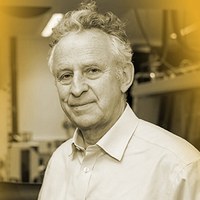 |
Professor Richard Friend | University of Cambrifdge, United KingdomProfessor Sir Richard Friend, FRS holds the Cavendish Professorship of Physics at the University of Cambridge. He and his group have developed polymer-processing techniques for conjugated polymers and demonstrated non-linear electronic excitations through electrical and optical measurements. He is credited for the first construction of MOSFET (Metal Insulator Semiconductor Field Effect Transistor) with polyacetylene as the active semiconductor; the demonstration of novel mechanisms of operation with novel behavior; and the first construction of the efficient, large-area, polymeric semiconductor LED’s (Light Emitting Diodes), based on polyphenylene-vinylene. His research on OLED has been used to develop flat screens, scroll screens, and motion screens for the future with the most well-known application of his research being the OLED TV. His work has also been applied to develop polymer field-effect transistors, light-emitting diodes, photoelectric diodes, optical pump-proof tubes, and direct-printed polymer transistors. More about Richard Friend |
 |
Professor Hironori Kaji | Kyoto University, JapanProfessor Hironori Kaji received his Ph.D. in inorganic chemistry from Kyoto University in 1994. In 1994, he joined Institute for Chemical Research, Kyoto University, as Assistant Professor, where in 2003 he was promoted to Associate Professor and in 2009 to Full Professor. He was a visiting scientist in Prof. Klaus Schmidt-Rohr's group at University of Massachusetts from 1998 to 1999 (as an International Fellowship by the Ministry of Education in Japan). He was a research fellow of the Precursory Research for Embryonic Science and Technology (PRESTO) program at Japan Science and Technology (JST) Agency from 2002 to 2006. His current research interests center on 1) fabrications of highly-efficient organic light-emitting diodes (OLEDs), 2) high-throughput in-silico design of organic molecules and organic synthesis for the device fabrications, and 3) the development of advanced solid-state NMR methodologies for the analysis of amorphous structures in the devices. 4) He has also carried out quantum chemical calculations and multiscale simulations to understand the structure-property relationship for the devices. More about Hironori Kaji |
 |
Professor Barry Rand | Princeton University, USAProfessor Barry Rand is a professor of Electrical and Computer Engineering and a member of the Andlinger Center for Energy and the Environment. Thin film electronics made from emerging semiconductors have the capacity to be pervasive within our daily lives. Notably, some thin film devices have established themselves quite successfully, such as the OLEDs for flat panel displays. The goal of his research is to work on emerging device concepts and materials to help to realize the next generation of thin film electronic devices. Specifically, he tries to understand and leverage the unique electronic and optical properties of thin film materials, and in particular semiconductors. This includes the use of molecular, perovskite, and chalcogenide (e.g. oxide) semiconductors, as well as nanostructured quantized matter for emerging applications in solar cells, light emitting devices, and transistors. More about Barry Rand |
 |
Professor Eli Zysman-Colman | University of St Andrews, United KingdomProfessor Eli Zysman-Colman obtained his Ph.D. from McGill University in 2003 under the supervision of Prof. David N. Harpp as an FCAR scholar where he conducting research in physical organic sulfur chemistry. He then completed two postdoctoral fellowships, one in supramolecular chemistry with Prof. Jay Siegel at the Organic Chemistry Institute, University of Zurich as an FQRNT fellow and the other in inorganic materials chemistry with Prof. Stefan Bernhard at Princeton University as a PCCM fellow. He joined the department of chemistry at the Université de Sherbrooke in Quebec, Canada as an assistant professor in 2007. In 2013, he moved to the University of St Andrews where he is presently Professor of Optoelectronic Materials and Fellow of the Royal Society of Chemistry. More about Eli Zysman-Colman |